

Elm Wood in Woodworking: Properties, Uses and Finishing Tips
Elm timber's interlocked grain makes it tough, hard to split and rewarding to work — here's how to handle its movement, avoid tearout and finish it well.
Elm is the wood that outlasted its own trees. Dutch elm disease took most of Britain's mature elms from the late 1960s onwards, and the boards you find in a timber yard today are as likely to come from a reclaimed barn beam, a fallen park tree or a wych elm grown on a Welsh hillside as from a commercial plantation. None of that matters much once the timber is on your bench. What matters is that elm is tough, springy, quietly beautiful and full of opinions about how it wants to be worked.
Why Elm Holds Together
Elm is ring-porous, which means each growth ring opens with a band of large pores before settling into denser, darker fibre. That structure gives it a springy, shock-absorbing character. More importantly, the fibres weave across one another instead of running straight, producing the interlocked grain that defines the species.
The practical result is a wood you simply cannot split along the grain with a wedge. That single property explains centuries of use: cartwheel hubs, Windsor chair seats, coffin boards, boat keels, mallet heads and butcher's blocks. It also explains why elm dents rather than shatters under impact, and why it grips nails and screws so stubbornly. In weight terms it sits in the middle of the hardwoods — lighter than oak or beech, noticeably heavier than any softwood.
Colour, Grain and Figure
Freshly planed elm runs from pale fawn to a greyish honey, sometimes with dull green or grey mineral streaks that follow the grain. Left in daylight it darkens steadily to a warm amber, which is why old pub tables look the way they do.
Flat-sawn boards show broad cathedral arches, often with a hazy ripple that shifts as you move around the piece. Because the grain reverses so often, no two boards look alike — lay out your whole project before you cut anything, number the boards and keep them in order. Burr elm, with its tight clusters of pin knots, is a different animal altogether and is usually kept for veneers, box lids and small turned work. Wych elm tends to carry the most dramatic figure.
Working Elm Without Tearout
Interlocked grain is wonderful to look at and awkward to plane. You cannot simply read the grain direction and work downhill, because the direction changes every few inches.
Hand tools
Use a sharp blade in a tight-mouthed plane and set it fine. A high-pitched plane — around 50 to 55 degrees, whether from a steep frog or a back-bevel on a bevel-up plane — handles reversing grain far better than a standard 45-degree cut. Skew the plane slightly so the iron slices rather than bulldozes, and take light passes. For the stubborn patches, reach for a cabinet scraper or a scraper plane; a well-burnished scraper will clean up figure that no smoother will manage.
Machines
Sharp knives and shallow cuts, around half a millimetre per pass through the thicknesser, with a slow feed. Forcing elm through dull knives is how you end up with torn patches that take an hour of sanding to disguise. Drilling, mortising and sawing are all straightforward. Pre-drill for screws and always drill pilot holes near end grain, even though elm resists splitting better than most.
Turning
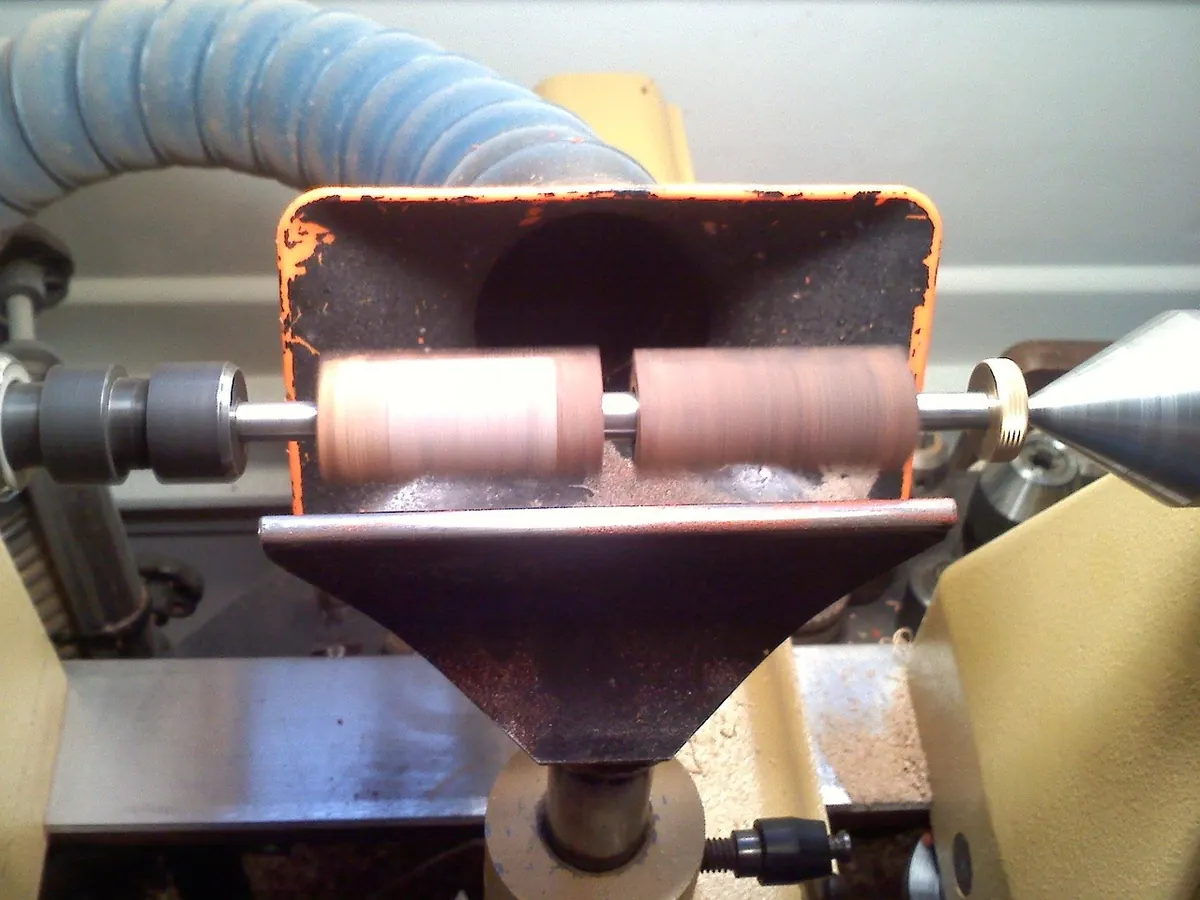
Elm turns beautifully. It holds fine detail, takes a clean bead or cove with a little care, and green elm turns almost like butter. Expect some tearout where the grain reverses, and deal with it using sharp gouges, light shearing cuts and a shear-scrape to finish. End-grain sections — the traditional butcher's block arrangement — stand up to years of chopping.
Movement: Design For It
Elm moves. Not dramatically in service, but enough that a wide panel clamped rigidly into a frame will find a way to complain. Newly sawn boards can twist and bow as they dry, so air-dry slowly with the ends sealed and the stack well stickered and weighted.
Buy furniture stock at a moisture content suited to a heated interior — around 8 to 12 per cent — and let it acclimatise in the workshop for a week or two before machining. Quarter-sawn stock is noticeably more stable than flat-sawn, and when you glue up a panel, alternate the growth rings so any cupping works against itself. Then build the movement in: table-top buttons, slotted holes, breadboard ends pinned only in the centre, frame-and-panel doors left unglued. Reclaimed elm deserves extra caution — it has often spent decades fighting gravity, so resaw it, let it settle, and watch for nails and grit.
Where Elm Earns Its Keep
- Chair seats and legs. The classic Windsor saddled seat relies on elm's refusal to split.
- Tables. Refectory and pub-style tops, ideally from wide boards kept as a single field rather than cut into narrow strips.
- Boat building. Keels, transoms, rudders and gunwales, where grain that holds and swells is worth more than grain that runs straight.
- Chopping blocks and end-grain boards. Tough, self-healing under a knife.
- Turned bowls, platters and burr boxes. Figure that rewards a clean finish.
- Interior joinery and flooring. Stair treads, thresholds, skirting, wide floorboards — often painted, but handsome left bare.
Finishing Elm
Elm's uneven pore structure means it can absorb finish blotchily, especially around the softer earlywood bands. Do not jump straight to oil on bare wood. Sand to around 180 to 220 grit, raise the grain with a damp cloth, let it dry and sand lightly again. Then apply a thin sealer coat — a thinned shellac wash or a proprietary sanding sealer — to even out absorption. Test everything on an offcut matched to your final piece, because mineral streaks can turn muddy under a yellowing oil.
For a hand-rubbed look, Danish oil or boiled linseed oil suits elm well, thinned for the first coat and built up over several applications, with a wax over the top once it has cured. For tabletops and floors, a hardwax oil or a wipe-on polyurethane gives better protection. Note that elm darkens with light, so pieces finished and placed differently will drift apart in colour over the years.
Practical Notes Before You Start
Elm is no longer cheap or easy to find in wide, clear boards, so buy a little more than you need and plan around the defects rather than fighting them. Ask the supplier whether stock is kiln-dried or air-dried, what the moisture content is, and where it came from — reclaimed elm behaves differently from freshly milled timber and needs different handling.
Finally, treat the dust with respect. Fine dust from any hardwood is a respiratory sensitiser, and elm is among the species that some woodworkers react to over time. Extract at source, wear a well-fitted mask, and keep the workshop air moving. If you develop persistent coughing, sneezing or skin irritation after working with it, stop and speak to a pharmacist or GP rather than working through it.
Photo: Pexels / Pixabay